RFID vs. Biometric: Which Office Access Wins in 2026?
The selection of the appropriate access control system has emerged as one of the crucial decisions for contemporary offices. While providing security to staff and assets is important, today’s firms need systems that are not only secure but also fast and easy to manage. RFID cards and biometric access control systems are among the most commonly used types; however, each of them has its own merits depending on the type of office being used.
Understanding the Two Technologies
Before comparing the strengths of these two systems, it is good to have a brief understanding of each of them.
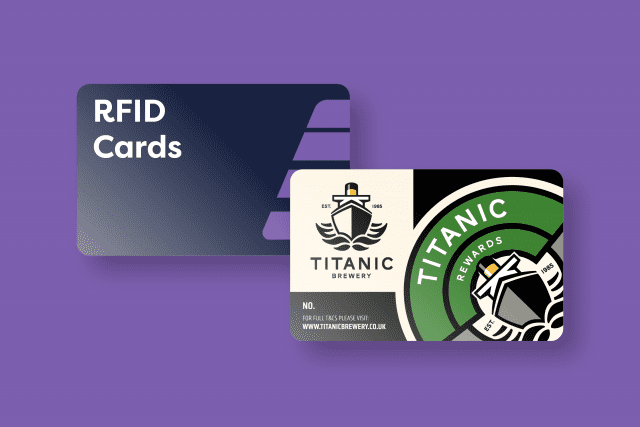
RFID access control uses contactless cards, key fobs, or even mobile credentials, which communicate through radio waves with a reader. All the employees need to do is place their credentials close to the reader in order to have access.
Biometric access control identifies users by their physical traits such as fingerprints, facial recognition, or even iris scanning. Unlike in RFID, in this case, the employees don’t have to carry a card but rather use their biometric data for verification purposes before gaining entry into the premises.
A lot of companies choose to integrate both these access control systems with an ID card printing service in the UK.
Comparing RFID and Biometric Access Control
There are many advantages to both technologies; however, the appropriate solution will depend on your office situation.
1. Speed and Convenience
RFID systems are designed for fast entry. A simple tap of a card allows employees to move through doors in seconds, making them ideal for busy offices where large numbers of people arrive at the same time.
Biometric systems are also efficient, particularly modern facial recognition solutions. Yet, the use of fingerprint and iris readers may take a little extra time since the system will have to authenticate everyone’s identity before letting him/her in.
In case ensuring speed of entry is important for you, RFID is always the best option.
2. Security and Identity Verification
A biometric system allows for better authentication of the users’ identities since credentials cannot be transferred to anyone. As fingerprints and facial features are exclusive to an individual, security is ensured.
While an RFID card ensures good security with today’s encrypted credentials, there is always a possibility that the card could be misplaced, stolen, or even transferred.
In the case of dealing with sensitive data, a biometric system gives more trust in identifying users.
3. Cost and Scalability
RFID solutions tend to be cheaper to deploy, particularly when the organization employs a lot of people. Replacing cards does not cost a lot, and scaling up the system as the organization expands is pretty easy.
Biometric solutions involve dedicated hardware and software that need to be programmed and configured, making them more expensive at first glance. Even though the price keeps falling, it remains more costly than RFID solutions. Firms wanting to deploy a cost-efficient system may prefer RFID.
4. Administration and Daily Management
Managing RFID access is simple. New cards can be activated, permissions changed, or lost cards deactivated almost instantly.
No need for replacement of lost cards in the case of biometric access, although new enrollments of new employees have to be done. The process of enrolling through biometrics takes longer.
Though both technologies streamline the access management process, RFID has more room to maneuver for businesses with often changing employees.
5. Compliance and Accountability
The reliability of the audit trail is greatly increased by the use of biometric systems because the access attempt always involves a specific verified individual. It helps reduce incidents of “buddy punching.”
Access logs are produced by RFID systems, but in this case, the organization has to take into consideration the fact that employees may be sharing their cards. Companies that need more accountability may find biometrics very useful.
Why Many Offices Choose a Hybrid Approach
Contrary to opting for one or the other, it has become quite common practice for many companies to integrate both technologies to have a more balanced security approach.
The RFID cards can control entry into the reception, conference, and general office zones, whereas biometric identification can be applied in high-security zones, such as the server room, financial department, research department, or personal executive offices.
Those organizations that have been giving their employees ID cards in the United Kingdom could use these very same IDs for regular access and just incorporate biometrics at places where additional protection is needed.
Which System Is Right for Your Office?
It will depend on your priorities. Go with RFID if your company places priority on quick entry, reduced cost of deployment, easy management of credentials, and scalability for expanding teams. It is highly effective for use in office environments, academic institutions, co-working spaces, and buildings with a large number of daily visitors.
If you prioritize prevention of credential sharing, more robust identity authentication, and logging of access events, then biometric access control is the right choice for you. It is very well-suited for environments that require each access event to be tied directly to an individual. A combination of both solutions is optimal for many companies.
Making the Right Choice for the Future
The methods of access control are changing as well, and office spaces in 2026 should be equipped with systems that can evolve along with their needs. No matter what method you will use (be it RFID, biometrics, or a combination of both), choosing a scalable solution that will offer encryption and central management will bring you long-term benefits.
Many things should be taken into account when choosing a provider (such as the quality of their products, the compatibility of the systems, and so on). Among the firms that offer these solutions is Swype. The best option will invariably be the one that fits in with the security needs and future considerations of your office.